

Echo

Weekly Updates

Let's join our newsletter!

Do not worry we don't spam!

Dr Thangs

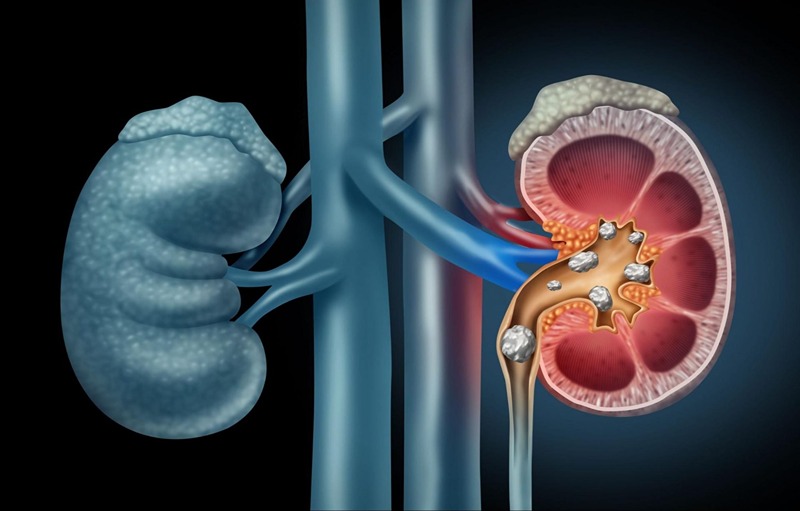
Kidney Stones: Symptoms, Causes, Treatment, and Prevention

  Author : Dr. Sheikh Jeelani   / BNYS | FTECH

Why Do Kidney Stones Happen? (Causes & Risk Factors)

Kidney stones form when there’s an imbalance in urine composition:

  • Too many stone-forming substances (calcium, oxalate, uric acid).
  • Too little stone-preventing substances (citrate, magnesium).

Common Causes:

  • Dehydration → concentrated urine = crystals form easily.
  • Diet: High salt, protein, or oxalate foods.
  • Medical conditions: Gout, hyperparathyroidism, obesity, recurrent UTIs.
  • Family history → higher genetic risk.
  • Medications: Certain diuretics, antacids, antivirals.

Symptoms of Kidney Stones

  • Many stones cause no symptoms until they move.
  • When they travel down the ureter, symptoms appear:
  • Severe flank pain (waves of sharp pain in back/side, radiates to lower abdomen or groin).
  • Painful urination or burning sensation.
  • Hematuria (blood in urine, pink/red urine).
  • Nausea & vomiting (due to pain).
  • Frequent urge to urinate.
  • Chills & fever (if infection is present → emergency).

Diagnosis of Kidney Stones

Doctors use:

  • CT Scan (gold standard) – shows even tiny stones.
  • Ultrasound – preferred in pregnancy.
  • X-ray (KUB) – may detect larger stones.
  • Urine tests – check crystal type, infection.
  • Blood tests – measure calcium, uric acid.

Treatment of Kidney Stones:

Treatment depends on stone size, type, location, and symptoms:

1.Small Stones (<5mm)

May pass naturally in urine.

Treatment: Drink 2–3 liters water/day, pain relievers, alpha-blockers (like tamsulosin) to relax ureter.

2.Medium/Large Stones (>6mm or stuck)

Often need medical procedures:

  • Extracorporeal Shock Wave Lithotripsy (ESWL): Sound waves break stones into tiny pieces.
  • Ureteroscopy: Thin scope inserted through urethra → stone removed or broken with laser.
  • Percutaneous Nephrolithotomy: Surgery for very large stones (>2cm).
  • Stent Placement: Keeps ureter open to allow urine to flow around stone.

Prevention of Kidney Stones

  • Since kidney stones often recur, prevention is very important:
  • Drink plenty of fluids (2.5–3 liters/day).
  • Limit animal protein (red meat, eggs, seafood → increases uric acid).
  • Eat more fruits/veggies (alkalize urine, add citrate which prevents crystals).
  • Limit high-oxalate foods (spinach, nuts, chocolate, tea).
  • Stay active – sedentary lifestyle increases stone risk.

Medications (for recurrent cases):

  • Thiazide diuretics → reduce calcium in urine.
  • Potassium citrate → increases stone-preventing citrate.
  • Allopurinol → lowers uric acid.

Complications of Kidney Stones

If untreated, kidney stones can cause:

  • Recurrent stones (common).
  • Urinary tract infections (UTIs).
  • Kidney damage / scarring.
  • Hydronephrosis (swelling of kidney from blocked urine).
  • Sepsis (life-threatening infection).

Final Thought

Kidney stones are hard mineral deposits formed when urine becomes concentrated. They cause severe pain, blood in urine, and urinary problems. Small stones may pass naturally, but larger ones need procedures. Prevention is mainly hydration + diet control.


Kidney Stones are Tough, But You’re Tougher.

Tags:


You Might Also Like